
The families CHIP was built for.
CHIP works for both situations: a parent moving into a care home, and a parent staying at home with paid carers. In both cases, the home funds the care, without it needing to be sold. We are honest about who the Plan is a good fit for. If your situation doesn’t match what’s described below, it probably isn’t the right path, and we’ll tell you so.
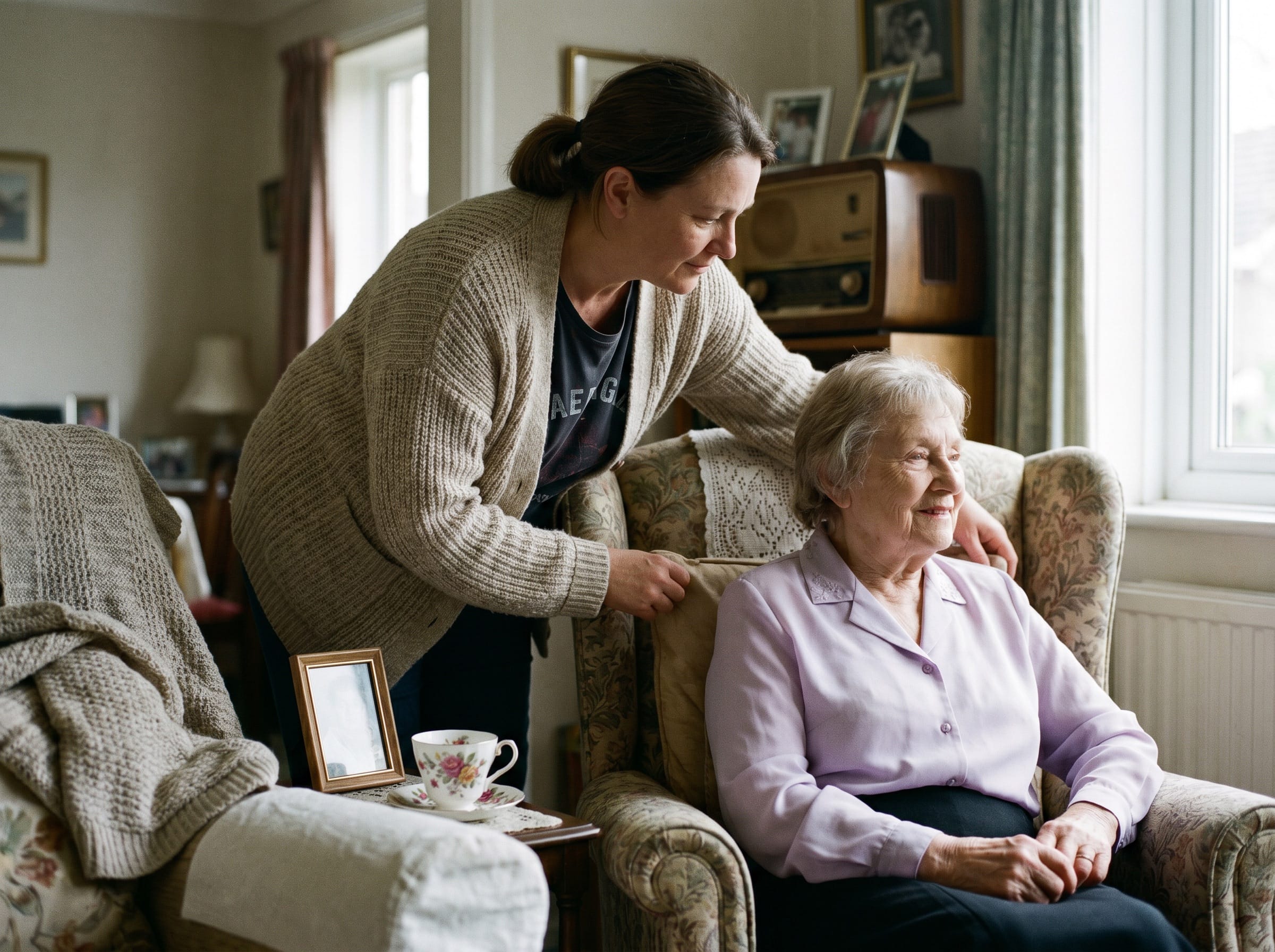
When a parent’s care becomes urgent.
Hospital is pushing for a discharge. The family is suddenly choosing between intensive care at home and a residential or nursing placement, with no plan for how to fund either. The home is the family’s biggest asset, and the council’s means test is about to start pulling it into scope.
CHIP works for both outcomes (home care or care home). It was built for exactly this moment. A ten-minute call gives you a working sense of whether it fits your family’s circumstances; a written Plan, solicitor-reviewed, follows if you decide to take it further.
- Signals this is your situation: a recent hospital admission; social work is asking about home equity; the family is looking at packages above the council threshold.
- What we’d do in the first call: talk through the package being proposed, sketch how the Plan would meet those costs, leave you with a written outline you can take to a solicitor.

A long care journey, ahead of you, not behind you.
Dementia care often spans years, not months. Short-term loans struggle at that timescale. Equity release has a borrowing limit. Selling the home is a one-off event that doesn’t flex if needs change.
The Plan’s structure (designed to fund care for life if needed, with no time limit) was built for the families staring at a multi-year horizon. The longer the care journey, the more the Plan’s economics align with the family’s.
- Signals this is your situation: a recent dementia diagnosis; a clinical timeline measured in years; care costs already creeping above what pension and savings can sustain.
- What we’d do in the first call: talk through the typical progression of care needs, model how the Plan would meet costs at three points along the journey, leave you with a written outline.

Thinking ahead, before a decision is forced.
Your parent is well and at home. No crisis yet. But you can see the trajectory, you understand what a hospital discharge can do to a family’s options, and you’d rather understand the choices now than be handed them at the worst possible moment.
Most families come to the Plan in a crisis. The ones who come earlier are usually clearer-eyed about the decision when it does arrive. There’s nothing to sign; the first conversation costs nothing and commits to nothing.
- Signals this is your situation: a parent in their late 70s or 80s, still at home; you’ve started having the conversation as a family; you’re reading around the options.
- What we’d do in the first call: describe the Plan plainly, answer your questions, and leave you with material you can come back to in a year if you need to.
When CHIP isn’t the right fit.
We try to spot this in the first call and tell you. Saving you a process that won’t work for your family is part of our job.
- Low equity in the home. CHIP’s economics depend on the home being a meaningful asset. If the property has little equity (significant mortgage outstanding, or in a market with limited growth) the structure doesn’t carry the funding.
- No expectation of needing care. The Plan is for families where care is imminent or visible on the horizon, not as a general financial planning tool.
- Your parent isn’t the property owner. The lease is granted by the property owner. If your parent doesn’t own the home (or owns only a share that isn’t practical to lease), the Plan doesn’t apply.
- Families committed to selling. Some families decide selling the home is the right route for them. That can be the right answer. The Plan is for families who don’t want to and are looking for a structural alternative.
- You want regulated financial advice. CHIP is a service, not an FCA-regulated product. Families who want regulated advice should speak to an authorised independent financial adviser before any decisions are made.
Speak to a person, ten minutes, no obligation.
The first call is free, brief, and committing to nothing. We listen first.
